Home / Categories / Deliverability
Can I trust my open rate?
An open rate cannot be trusted fully. systeme.io's own documentation says the data behind open rate depends on the reader's device and their inbox provider's sharing policies, and it names iOS as a particular case. That same number still helps decide which sending pool your account sits in, and can trigger the automatic clean that deletes silent contacts.
What systeme.io says about the number itself
Its guidance for the first days of sending states plainly that some of the data behind your statistics depends on devices and inbox providers. For every metric it tracks, including open rate, the collection of that information depends on how a device shares it, and it names iOS devices specifically, alongside inbox providers and their own feedback policies.
Its own advice follows from that: read the indicators together rather than alone. A drop in open rate by itself is not always significant, but combined with other signals it can reveal a real deliverability issue.
One documented blind spot, though it is not about opens
The one concrete example systeme.io gives for a provider withholding data is Gmail, and it is about spam reports rather than opens. If a Gmail contact reports an email as spam, that report is never passed back to systeme.io, so it never reaches the spam-rate figure. Tracking that specific gap requires Google Postmaster Tools, run separately from the systeme.io dashboard.
systeme.io's own text does not spell out a matching mechanism for why open rate itself might read high or low on any particular device. It states that the dependency exists, and names iOS as one case, without explaining what happens underneath.
What the number still decides
Open rate is not shown for information alone. It is one of three metrics deciding which pool of shared sending addresses a systeme.io account sits in, checked daily.
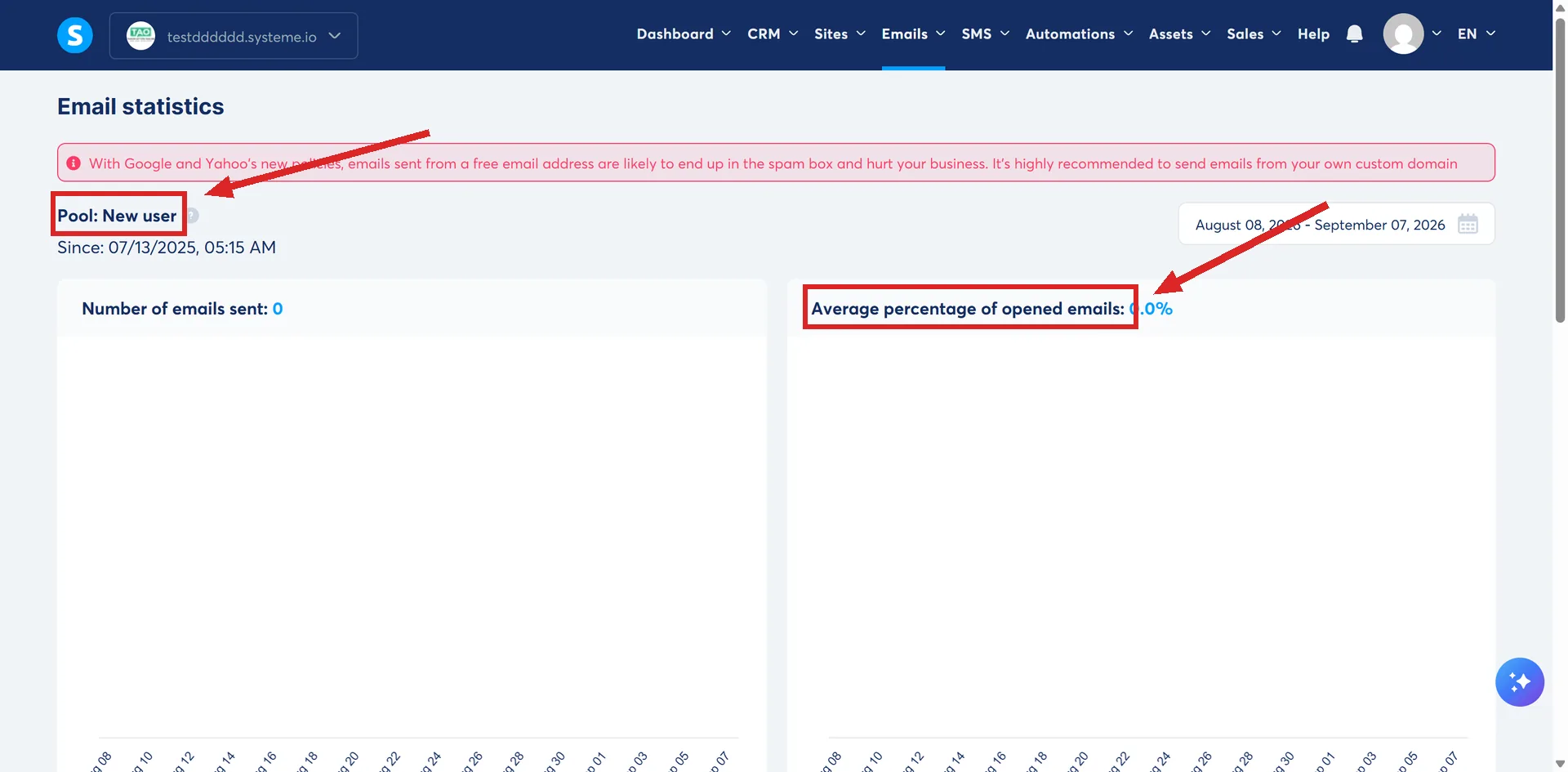
| Pool | Open rate | Spam rate | Bounce rate |
|---|---|---|---|
| Low risk | Over 20% | Under 0.25% | Under 0.7% |
| Moderate risk | 10% to 20% | 0.25% to 0.4% | 0.7% to 1.8% |
| High risk | Under 10% | 0.4% to 1% | 1.8% to 5% |
| Quarantine | Not specified | Over 1% | Over 5% |
The other thing it can trigger without anyone watching
Settings, then Emails, holds an Automatic list cleaning section with two rules per group of contacts: unsubscribe or delete everyone who has not opened an email in a set number of weeks, from 1 to 26. Both rules run on the same single signal, whether an open was recorded.
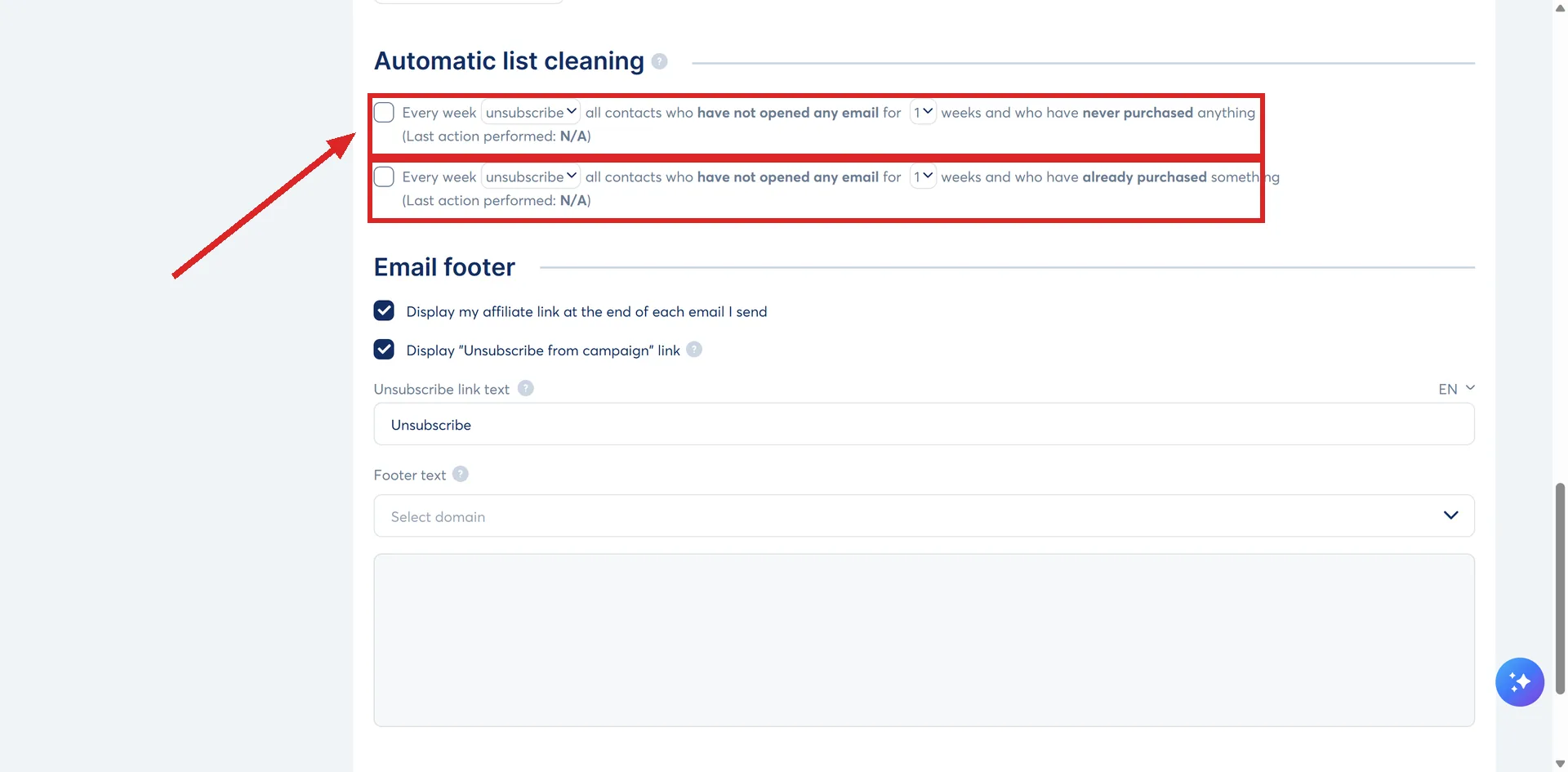
A real reader who opens marketing email on a device systeme.io itself flags as harder to track properly is judged by the same flag as everyone else. If that flag under-counts for them specifically, a weekly automatic rule can unsubscribe or delete them for looking silent when they were not.
What to do with a number you cannot fully verify
systeme.io's own advice is the practical answer here: do not read open rate on its own. A quiet open rate with a normal click rate and no rise in bounces looks different from one where every metric is moving the same way, even though the open percentage on its own can look identical in both cases.
For a list with a large Gmail share, Google Postmaster Tools reports engagement and spam data straight from Gmail, outside whatever systeme.io's own tracking can see. It needs the sending domain verified separately, and it is a different login from the systeme.io dashboard.
How I checked this answer
Nothing on this site is written from memory. These are the sources I checked to write this answer, and the date I checked them.
- General guidelines and best practices for email deliverability during the first few dayshelp.systeme.io, article 4247
- Do you need a dedicated IP to send emails with systeme.io?help.systeme.io, article 4468
- How to automate the process of cleaning up your contact listhelp.systeme.io, article 4216
Checked on
Did this answer your question?
Keep reading
- Can I put affiliate links in my emails? No rule mentions affiliate links. Several would catch one anyway.
- If I change my sending domain, do I start from scratch? Not from zero, but not free either. What actually resets when the domain changes.
- Why did my subscribers get the same email twice? Not a fault. Three documented systeme.io actions can send the same content twice.